
StarTalk with Neil deGrasse Tyson
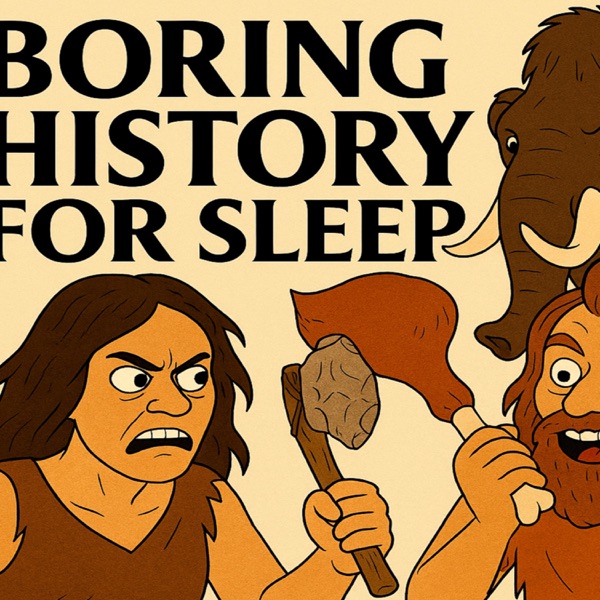
In the mid-14th century, a devastating plague swept across Europe, transforming everyday life and leaving a lasting mark on medieval society. Known as the Black Death, the pandemic spread along busy trade routes, reaching crowded towns, rural villages, and major cities. Fear and uncertainty spread as communities struggled to understand the disease, while limited medical knowledge made it difficult to respond. Tonight, we explore how the Black Death reached Europe, how medieval people understood the outbreak, and how the catastrophe changed work, religion, trade, and the balance of social power. From bustling ports to quiet villages, this is the story of a pandemic that reshaped an entire continent. Boring History for Sleep — Soft stories about forgotten lives, difficult times, and the events that changed our world.
In the mid-14th century, a devastating plague swept across Europe, transforming everyday life and leaving a lasting mark on medieval society. Known as the Black Death, the pandemic spread along busy trade routes, reaching crowded towns, rural villages, and major cities. Fear and uncertainty spread as communities struggled to understand the disease, while limited medical knowledge made it difficult to respond. Tonight, we explore how the Black Death reached Europe, how medieval people understood the outbreak, and how the catastrophe changed work, religion, trade, and the balance of social power. From bustling ports to quiet villages, this is the story of a pandemic that reshaped an entire continent. Boring History for Sleep — Soft stories about forgotten lives, difficult times, and the events that changed our world.
In the mid-14th century, a devastating plague swept across Europe, transforming everyday life and leaving a lasting mark on medieval society. Known as the Black Death, the pandemic spread along busy trade routes, reaching crowded towns, rural villages, and major cities. Fear and uncertainty spread as communities struggled to understand the disease, while limited medical knowledge made it difficult to respond. Tonight, we explore how the Black Death reached Europe, how medieval people understood the outbreak, and how the catastrophe changed work, religion, trade, and the balance of social power. From bustling ports to quiet villages, this is the story of a pandemic that reshaped an entire continent. Boring History for Sleep — Soft stories about forgotten lives, difficult times, and the events that changed our world.
This episode explores the ancient religious landscape of the Arabian desert through Safaitic inscriptions, which offer a direct window into the lives of nomadic peoples. The discussion traces the prominence of deities like Allat, the 'Lady of Abundance,' and the sun god Shams, revealing a polytheistic system defined by practical negotiation and survival rather than abstract theology. As the narrative progresses, it examines the tension between approachable gods and the unchangeable force of fate, alongside the ritualistic practices of sacrifice and pilgrimage. The episode concludes by reflecting on the dramatic transition to monotheism, which reclassified these long-held deities as mere human inventions, even as their stone carvings remain as a permanent testament to their existence.
This episode explores an alternate history where a massive asteroid missed Earth 66 million years ago, allowing the Mesozoic ecosystem to continue thriving. It details how dinosaurs maintained dominance through superior biological engineering—such as efficient respiratory systems and thermoregulatory feathers—and how they adapted to dramatic global shifts from a greenhouse world to an icehouse era. The narrative traces the co-evolution of dinosaurs and flowering plants, the rise of grasslands, and the emergence of complex social structures. Ultimately, it envisions a biologically rich, undisturbed planet where mammals remained in the shadows and a diverse, thriving world of giants continues to breathe under the same stars.
This episode explores the dramatic geological and biological transformation of Antarctica, from its origins as a lush, temperate part of the supercontinent Gondwana to its current state as a frozen wasteland. Through fossil evidence like coal, pollen, and dinosaur remains, we reconstruct a vibrant Jurassic ecosystem characterized by seasonal forests, volcanic activity, and a complex food web of armored herbivores and apex predators like Cryolophosaurus. The narrative traces the continent's slow southward drift and eventual isolation, which triggered a catastrophic climatic shift. We examine how the sudden asteroid impact 66 million years ago and the subsequent gradual cooling—driven by declining carbon dioxide and the formation of the Antarctic Circumpolar Current—permanently altered the planet, turning a biological crossroads into a thermally quarantined ice sheet.
This episode explores the life of Joan Kennedy, tracing her journey from a controlled upbringing in Bronxville to her role as a prominent political figure within the Kennedy dynasty. It examines the profound tension between her curated public persona—as a polished, supportive senator's wife—and her complex private reality, marked by the emotional toll of navigating infidelity, family tragedy, and addiction. Beyond the political spotlight, the narrative highlights Joan's identity as an accomplished classical pianist and her eventual pursuit of independence following her separation from Ted Kennedy. Ultimately, her story serves as a broader commentary on the societal pressures placed upon women to maintain a perfect outward appearance at the expense of their true selves.